


YOUR BAG
YOUR BAG
Almost every piece of jewelry eventually reaches a moment when it is no longer part of your everyday life. Not because it is broken. Not because it has lost its quality. But because you have changed.
Perhaps your style has evolved. Perhaps your priorities are different. Or perhaps you simply want to express yourself in a new way. What happens next? Do you put it away in a drawer? Recycle it?
Or is there another way for its story to continue?
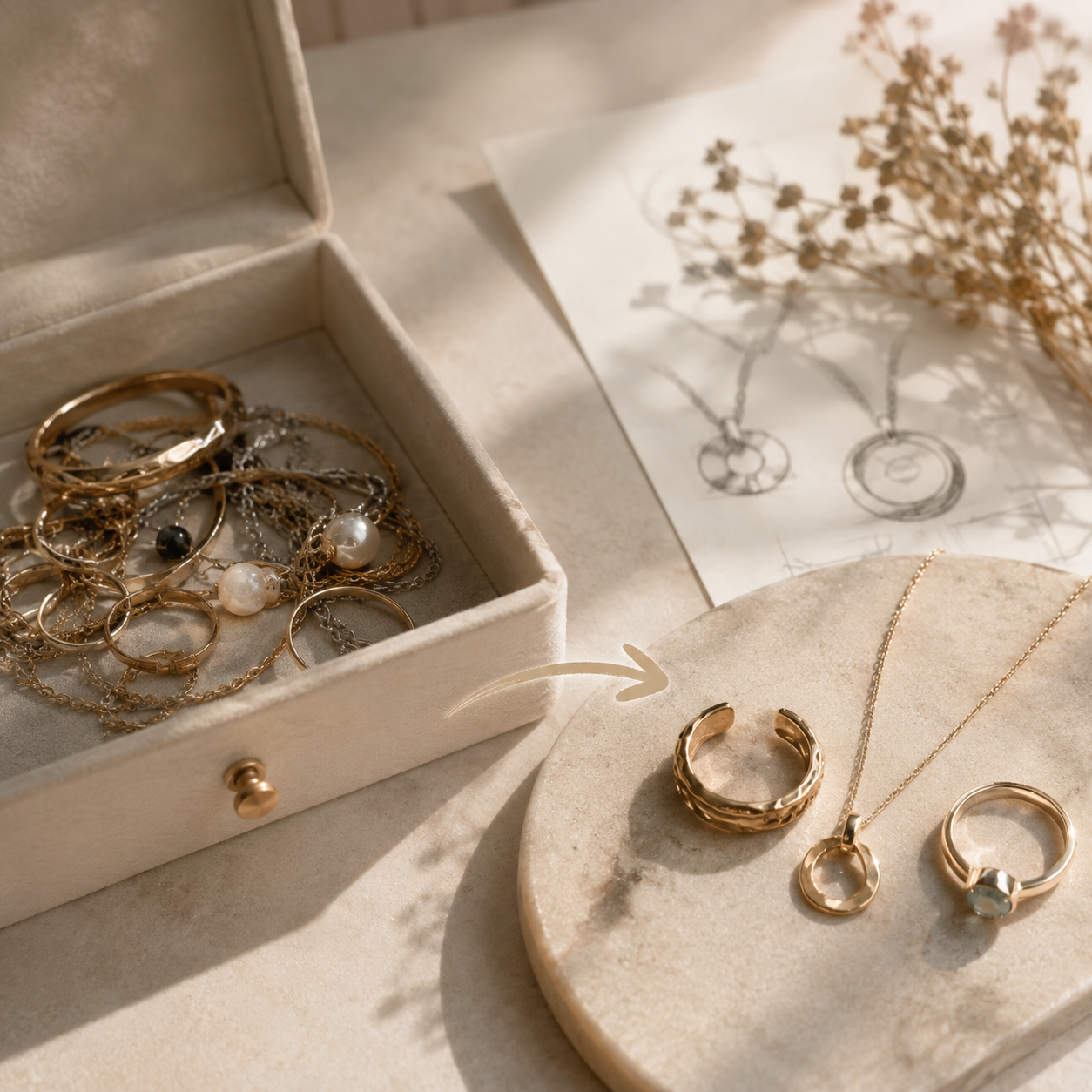
When a product no longer serves its original purpose, it does not necessarily mean its journey has come to an end. There are many ways for it to continue creating value.
You can reuse it. Repair it. Recycle it. Or even give it an entirely new role.
Each of these approaches helps reduce waste and make better use of resources.
The real difference lies in how much of the product’s original value you choose to preserve.
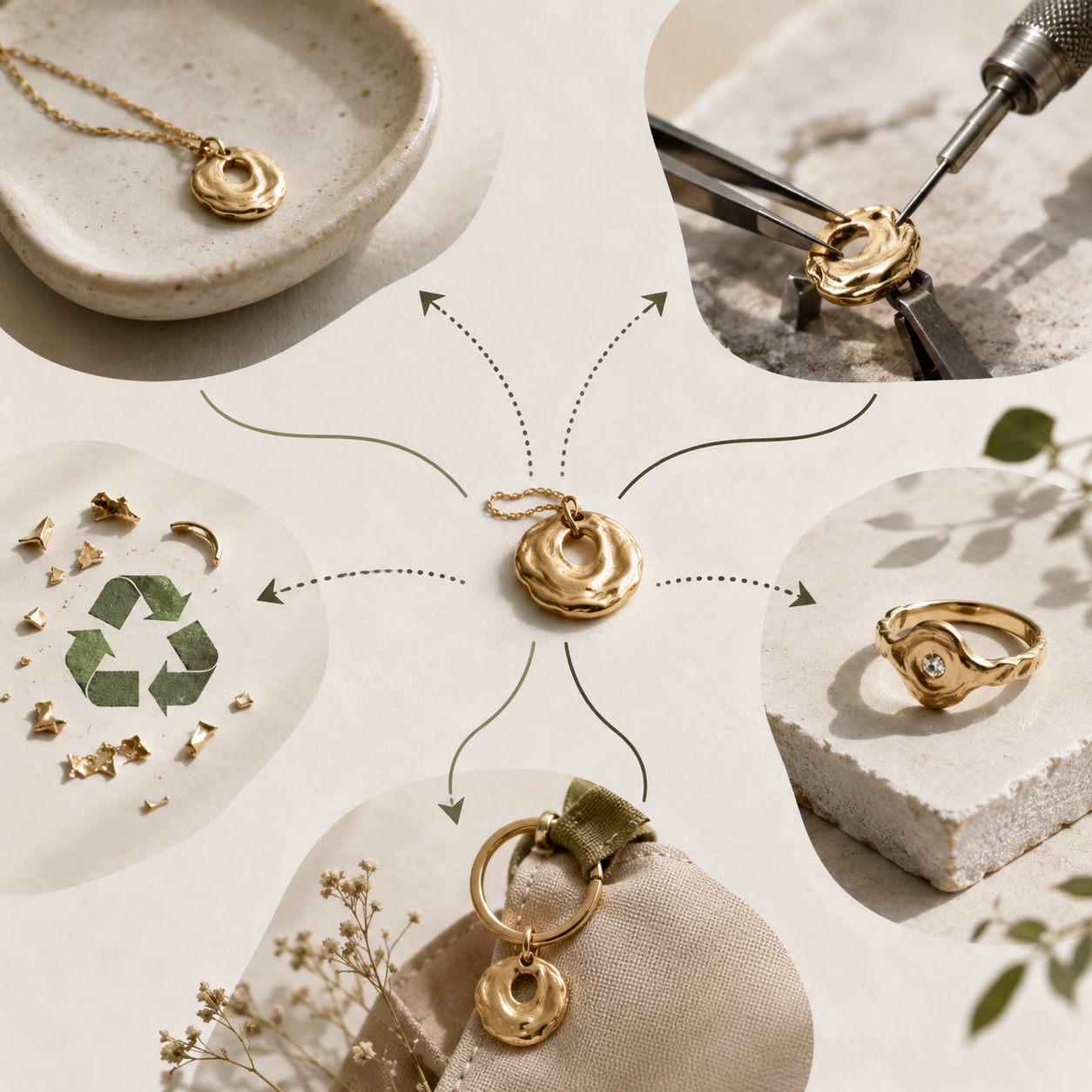
When a piece of jewelry is no longer being worn, there is more than one way for its story to continue.
Different approaches can extend its life, each in its own way.
Among the most common are:
Each of these approaches contributes to sustainability.
The difference lies in how much of the value that already exists is preserved.
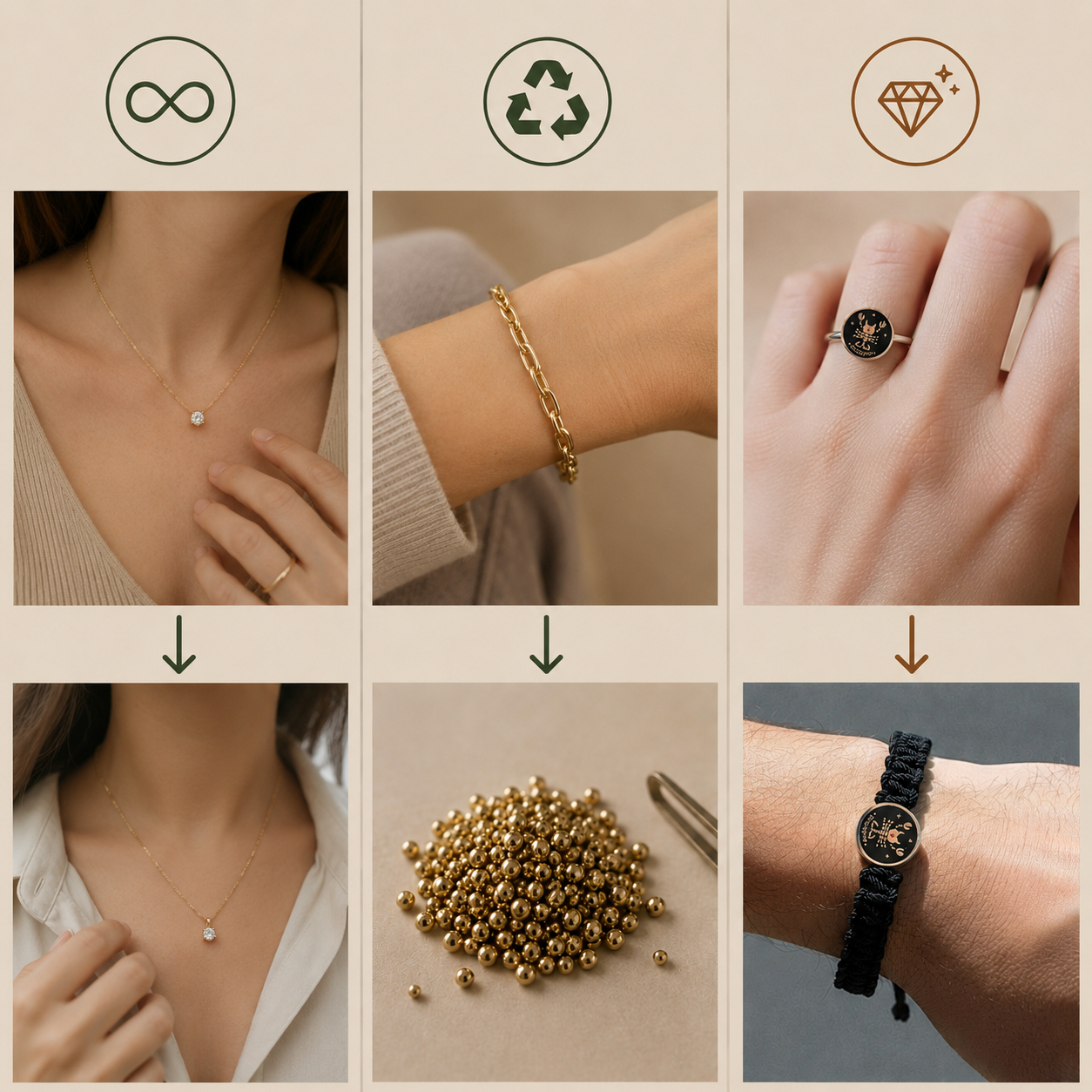
When you recycle a piece of jewelry, you mainly preserve its material. The metal is melted down and used again to create something new.
Jewelry Upcycling follows a different philosophy.
It does not simply aim to preserve a product. It aims to preserve all the value that has already been created around it. Not only the metal.
But also:
Because, quite often, the greatest value of a piece of jewelry is not found in the material it is made from.
It is found in everything it represents.
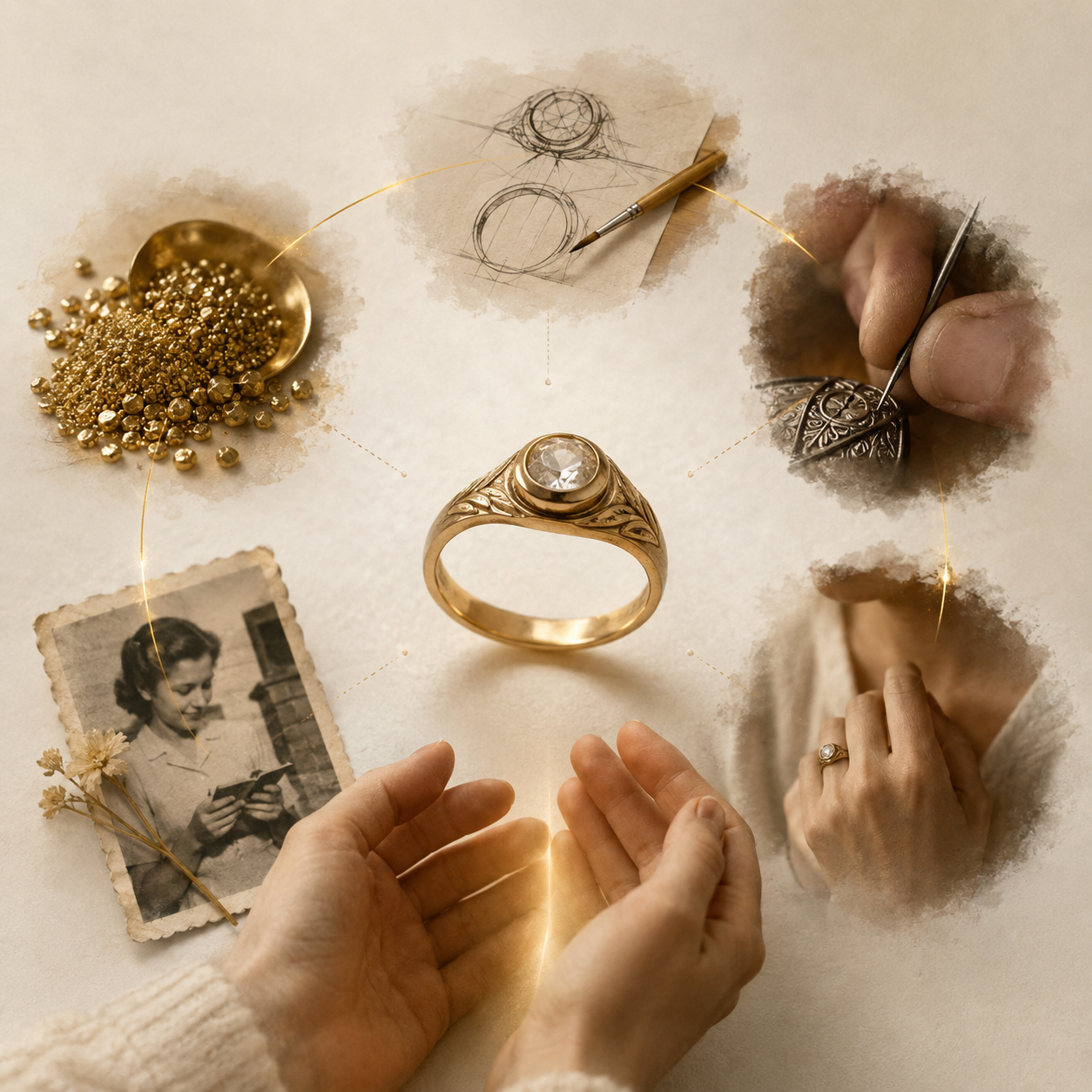
We usually think about upcycling when a product has already reached the end of its useful life.
But what if that possibility existed from day one?
If a piece of jewelry were designed to adapt as your life changes, perhaps it would never need to be replaced in the first place. The ability to evolve is not a last-minute solution. It is a design decision that can shape the entire lifespan of a product.
Perhaps the most important characteristic of sustainable jewelry is not the material it is made from.
Perhaps it is its ability to remain relevant for years to come.
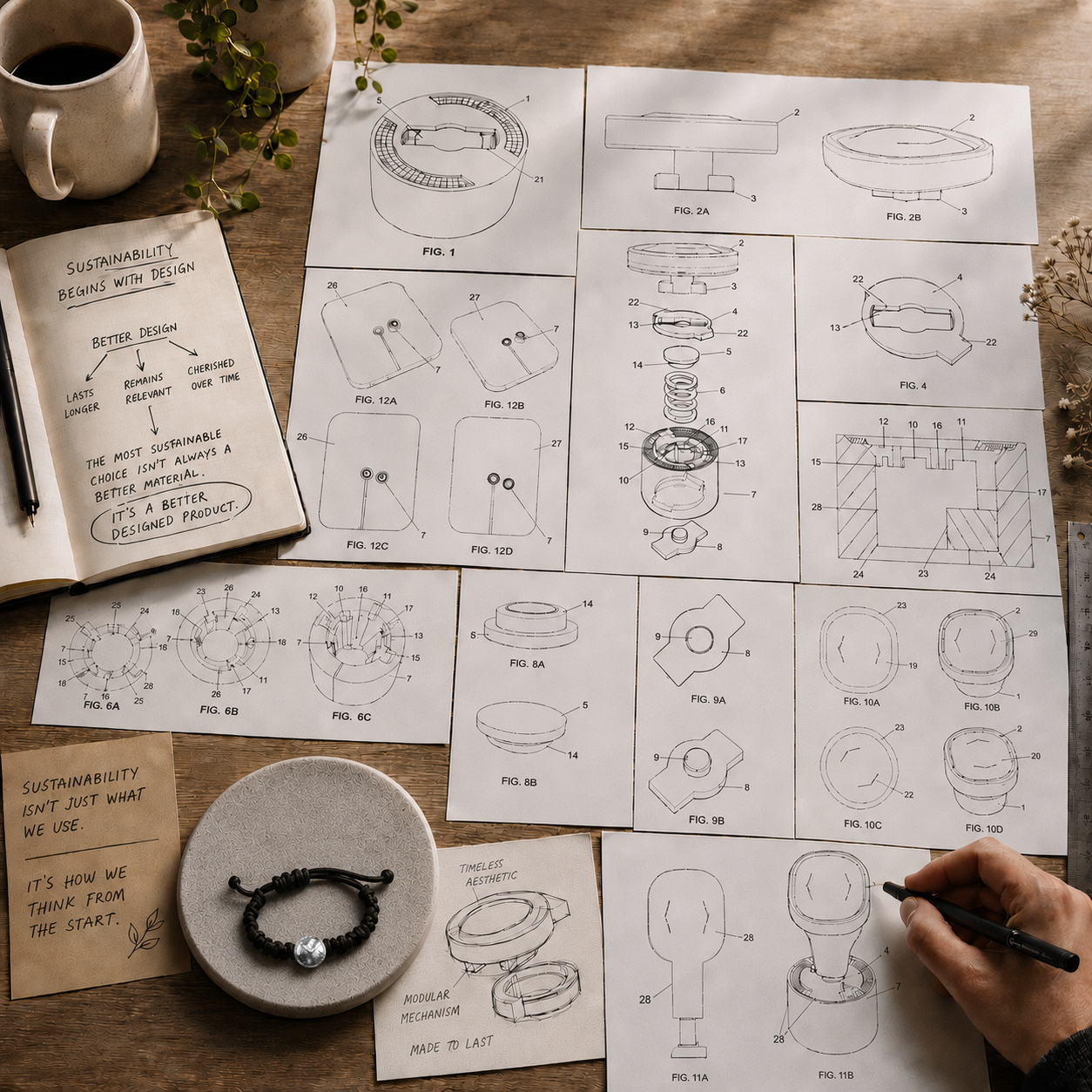
Good design does more than solve today’s problems.
It also anticipates tomorrow’s.
For jewelry, that means being able to adapt to different needs, different occasions and different ways of expressing yourself. A piece of jewelry that can transform is more likely to keep being worn.
And the longer a product remains in use, the more value it creates from the resources that were invested in making it.
That is why design is one of the most important dimensions of sustainability.
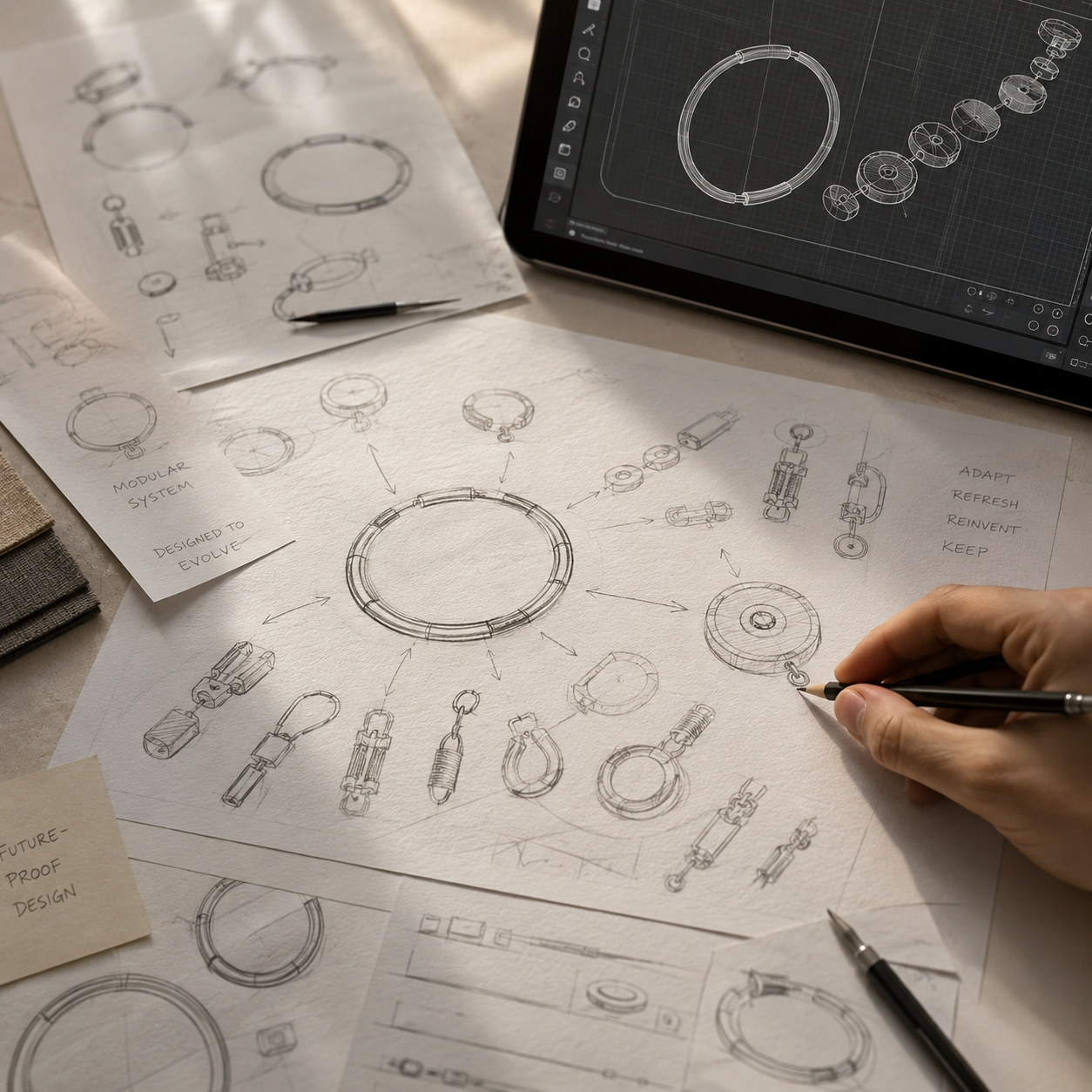
When we talk about sustainability, it is easy to focus only on materials.
In reality, many other factors shape a product’s environmental impact. Its lifespan. Its repairability. Its ability to remain useful. And whether it needs to be replaced at all.
The longer a product stays in use, the greater the value it creates from the resources invested in making it.
That is why sustainability is about more than materials.
It is also about design.
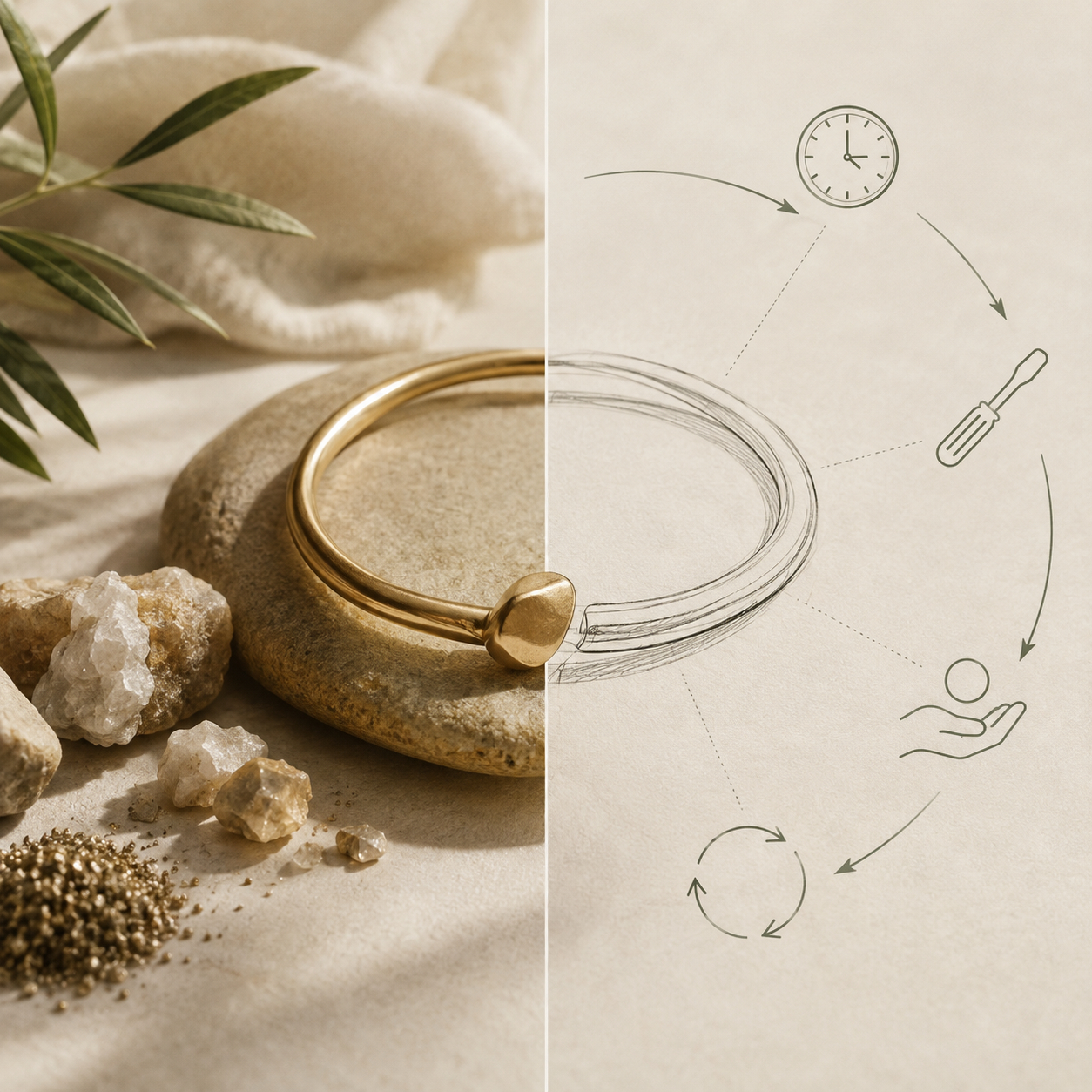
Not every change in your life has to be accompanied by an entirely new piece of jewelry. Sometimes, what needs to change is not the jewelry itself. It is the way you use it.
When a product can take on new forms, new purposes and new meanings, it has more opportunities to remain part of your everyday life. And perhaps that is one of the most meaningful forms of sustainability.
Not constantly replacing.
But creatively evolving what you already own.
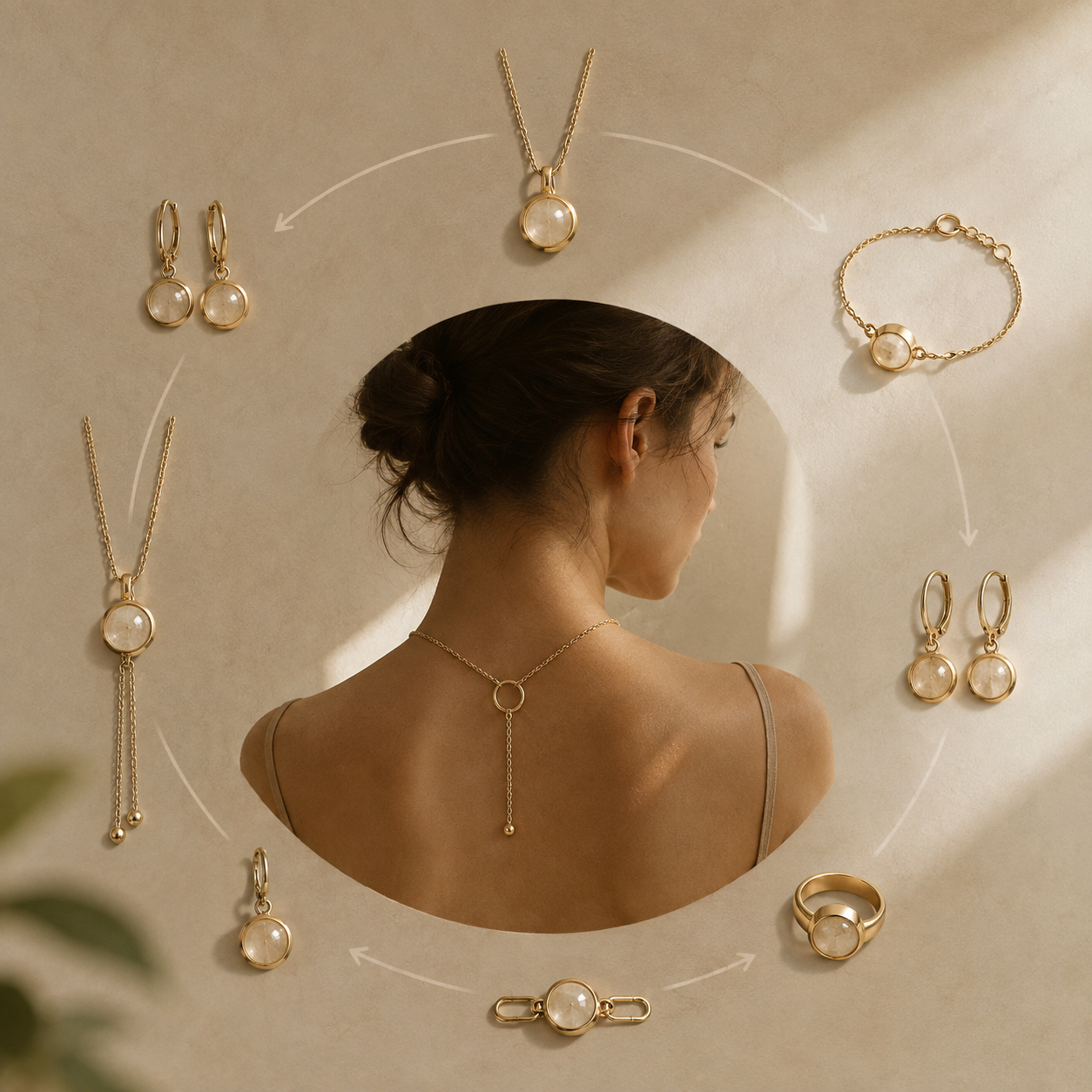
At Joolify, we believe sustainability should not be a solution applied at the end of a product’s life. It should be part of its design from the very beginning.
Discover how the Joolify System was created so jewelry can evolve with you, taking on new forms, new uses and new meanings without losing its identity.
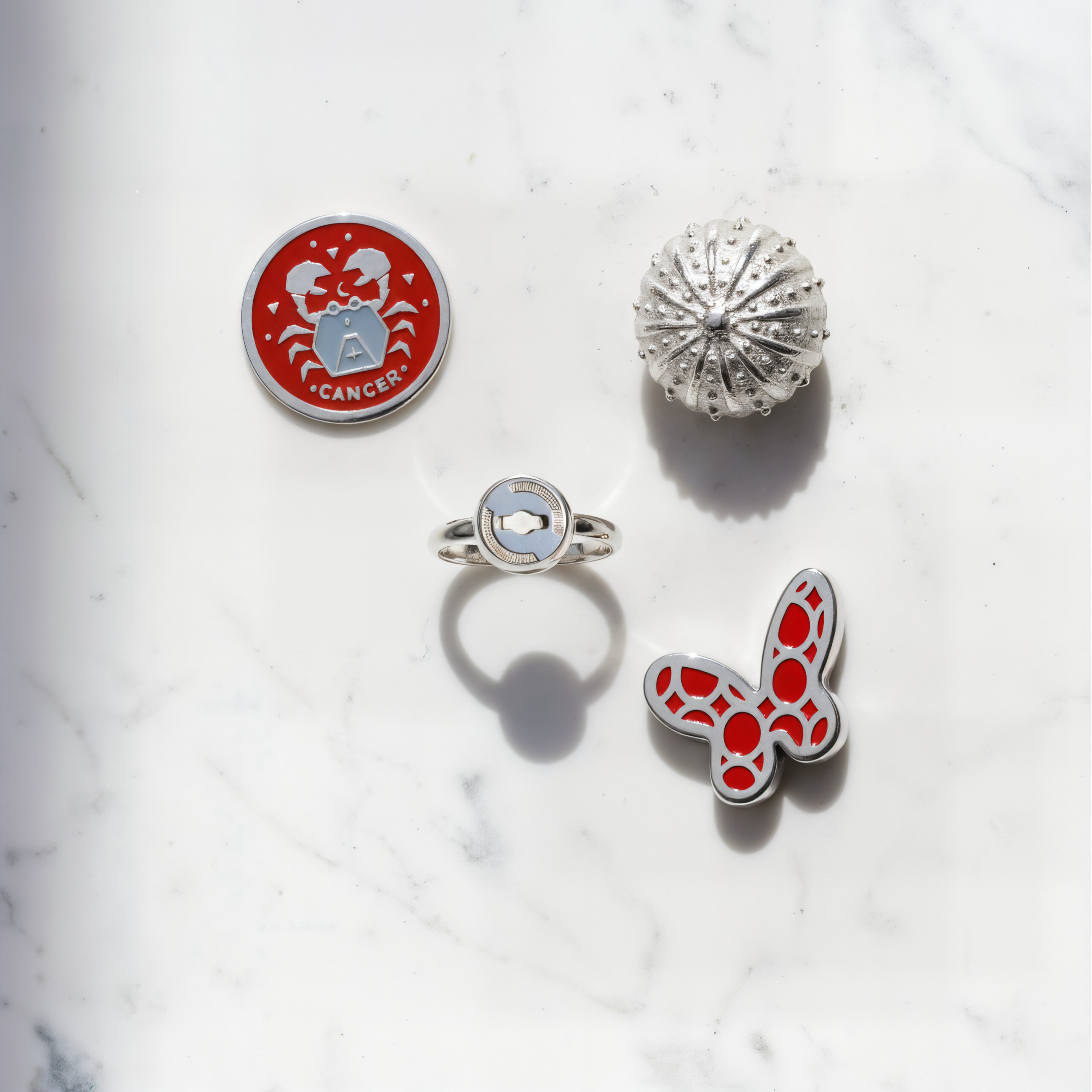
Recycling mainly preserves the material of a piece of jewelry, while Jewelry Upcycling aims to preserve as much of its existing value as possible, including its design, craftsmanship, story and emotional significance.
Yes. Instead of being melted down and recreated, jewelry can gain a new form, purpose or meaning. This extends its lifespan while preserving more of the value it already carries.
Design determines how easily jewelry can continue to be used, adapt to changing needs and remain relevant over time. The longer it stays in use, the greater the value created from the resources invested in making it.
