


YOUR BAG
YOUR BAG
When you hear the word “circularity,” recycling may be one of the first things that comes to mind. What happens to a product when you no longer need it.
But there is another question worth asking.
What if you considered the end before you even designed the beginning?
What if jewelry were designed from the start to be used for longer, adapt, evolve or take on new roles? Circularity would no longer begin when the jewelry stops being used.
It would begin with the way it was designed.
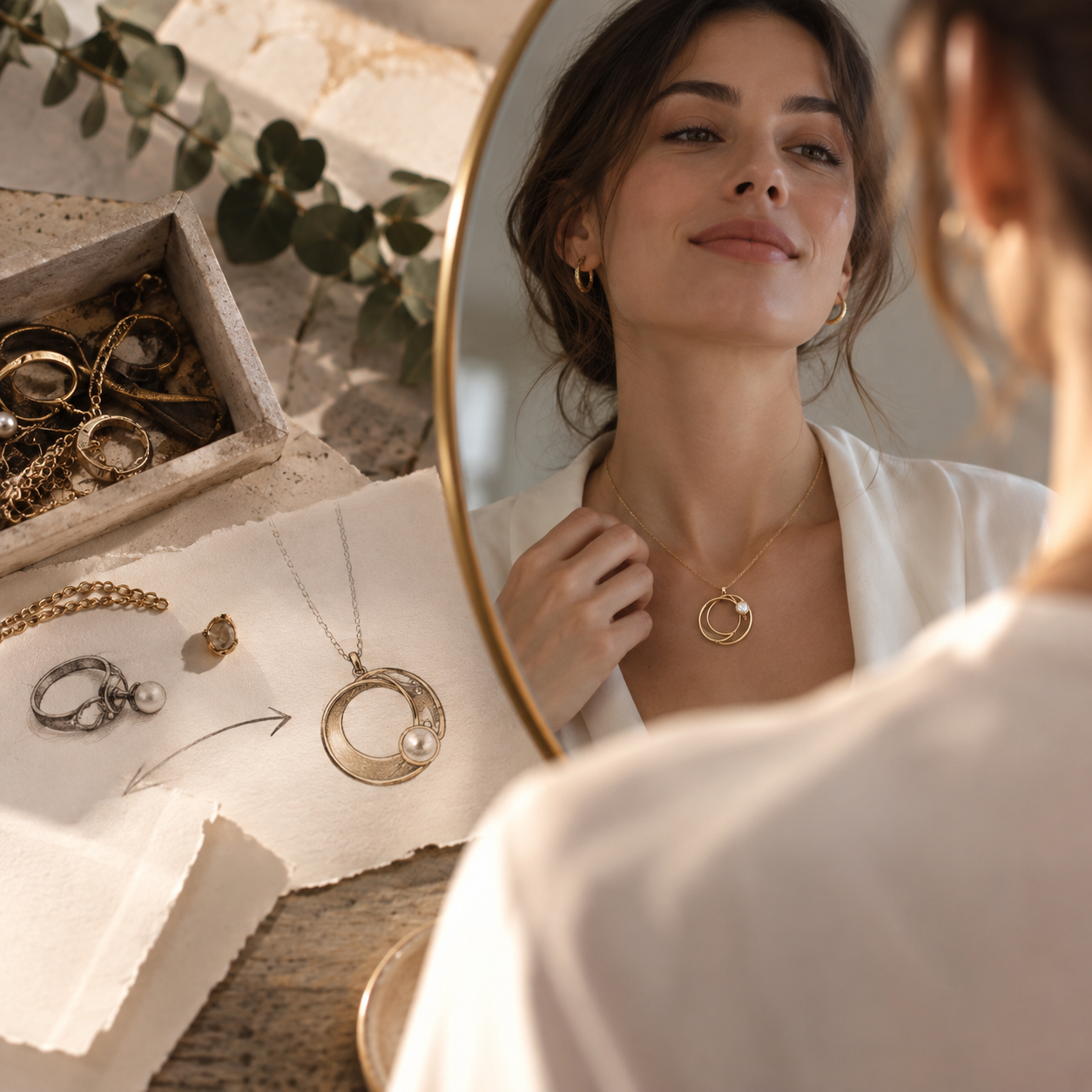
For many products, the journey is relatively simple. They are made. Purchased. Used. And eventually replaced or discarded.
This is largely a linear way of thinking. Circular thinking tries to change that journey.
Instead of asking only:
“What will we do with the product at the end?”
it also asks:
“How can we delay that end?”
And that second question can fundamentally change the way you design a product.
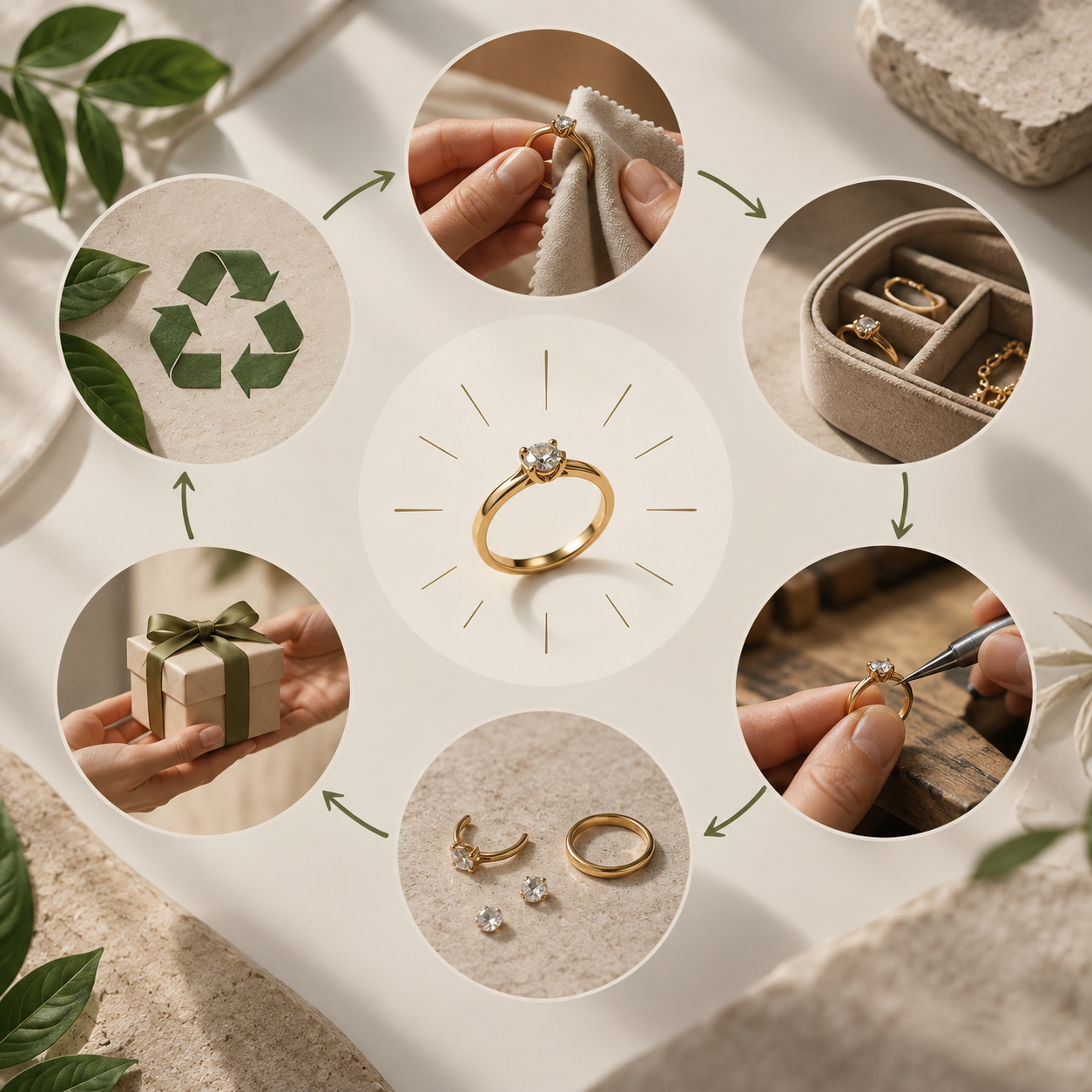
Recycling has an important role to play. But it usually comes relatively late in a product’s life. Before reaching that point, other possibilities may exist. You may continue using it. Adapt it to new needs. Change one part instead of replacing the entire product.
Give it a new use or a new form.
And when these possibilities have already been considered through design, circularity stops being merely an end-of-life solution.
It becomes part of the product’s entire life.
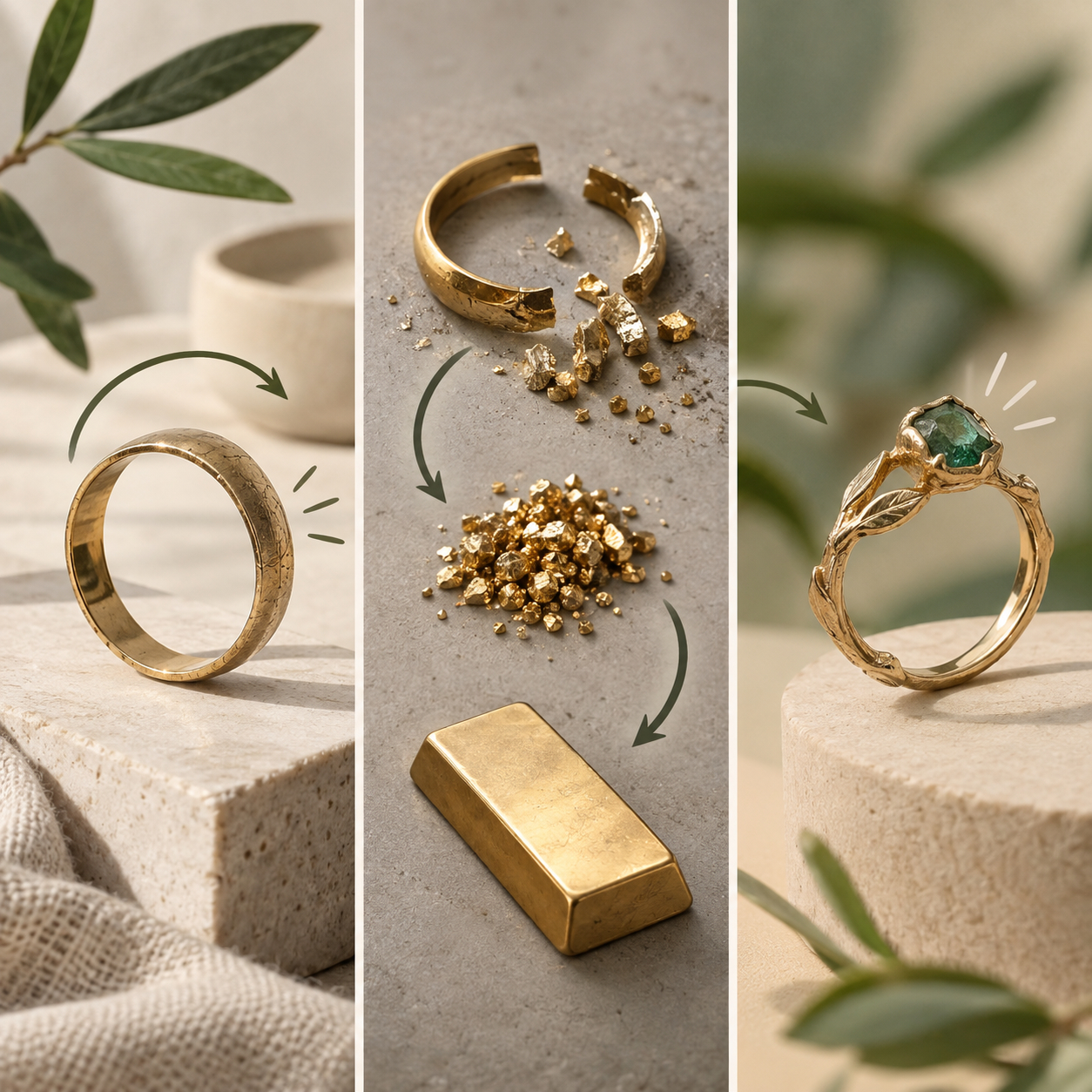
An individual product has defined limits. A system can create more possibilities. If its individual elements can work together, be replaced or form different combinations, every change does not need to start again from zero.
You can keep what remains useful to you. And change only what needs to change.
This is one of the most interesting ideas behind circular jewelry systems:
value does not exist only within each individual object.
It can also exist in the relationships between its parts.
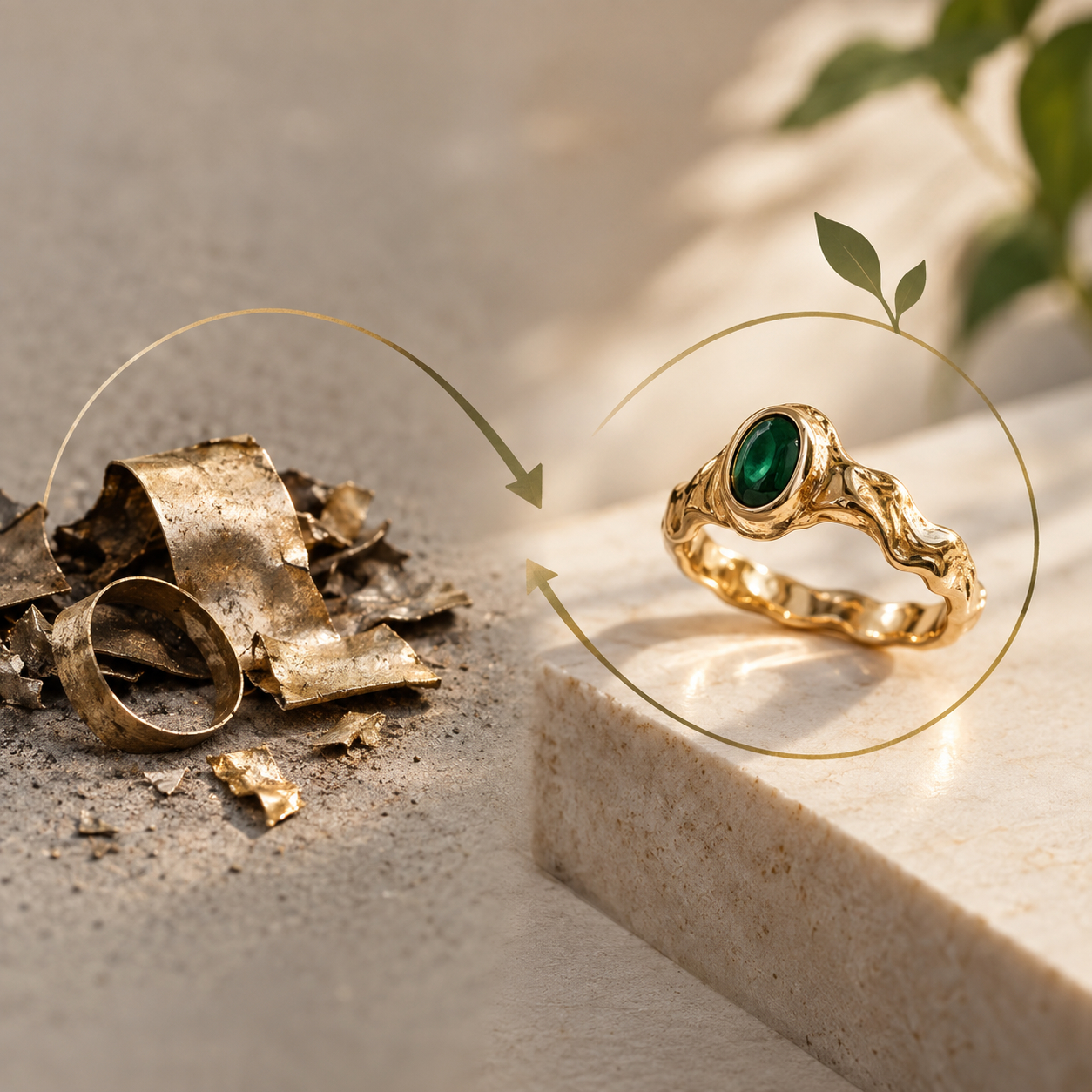
For such a system to work, however, it needs more than interchangeable parts.
It needs compatibility.
A new element should be able to work with something you already own. And what you already own should be able to remain useful as the system evolves. Otherwise, evolution may simply become another form of replacement.
Compatibility can change that logic.
Because it allows you to add new possibilities without necessarily eliminating the value of what came before.
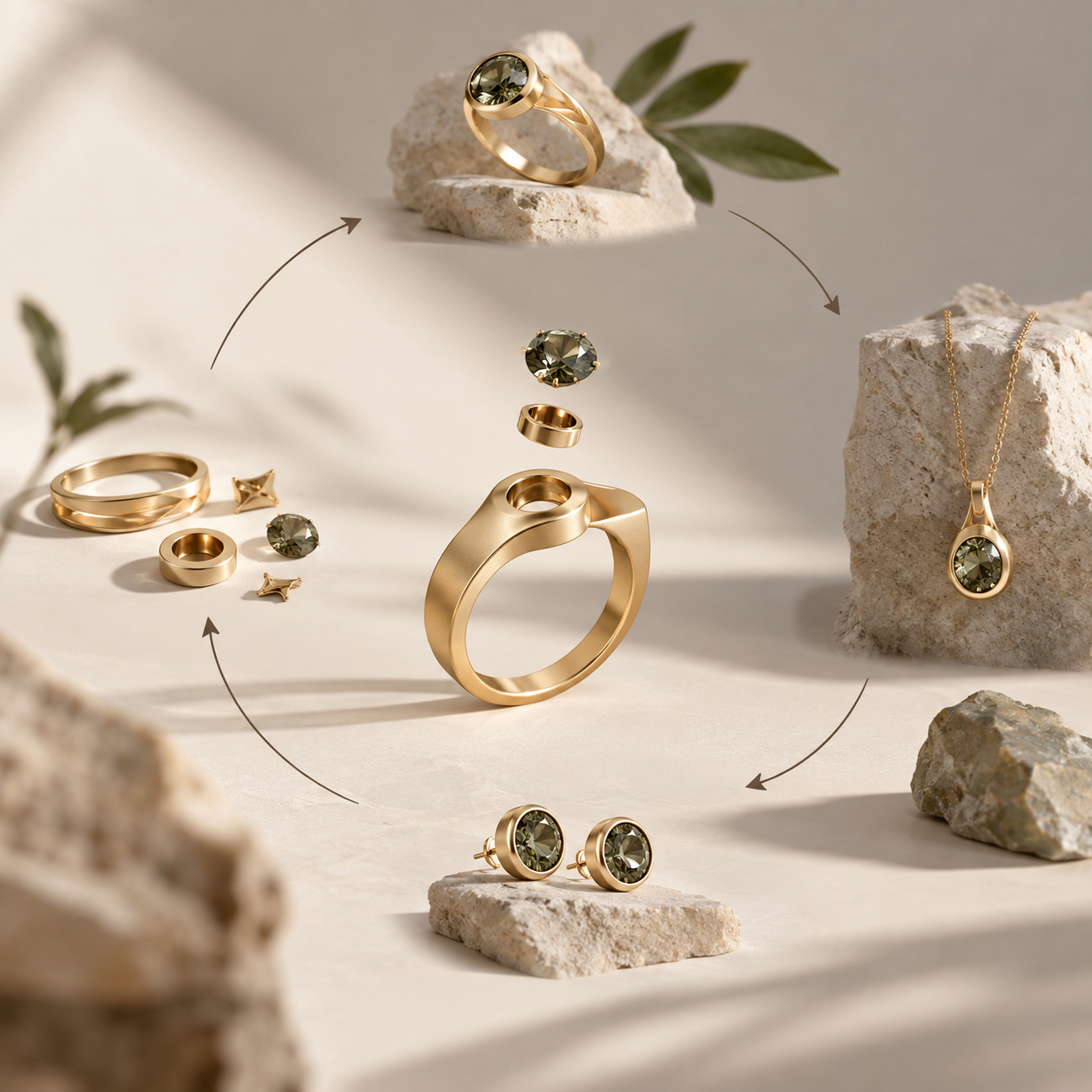
This logic can become very tangible in a modular jewelry system.
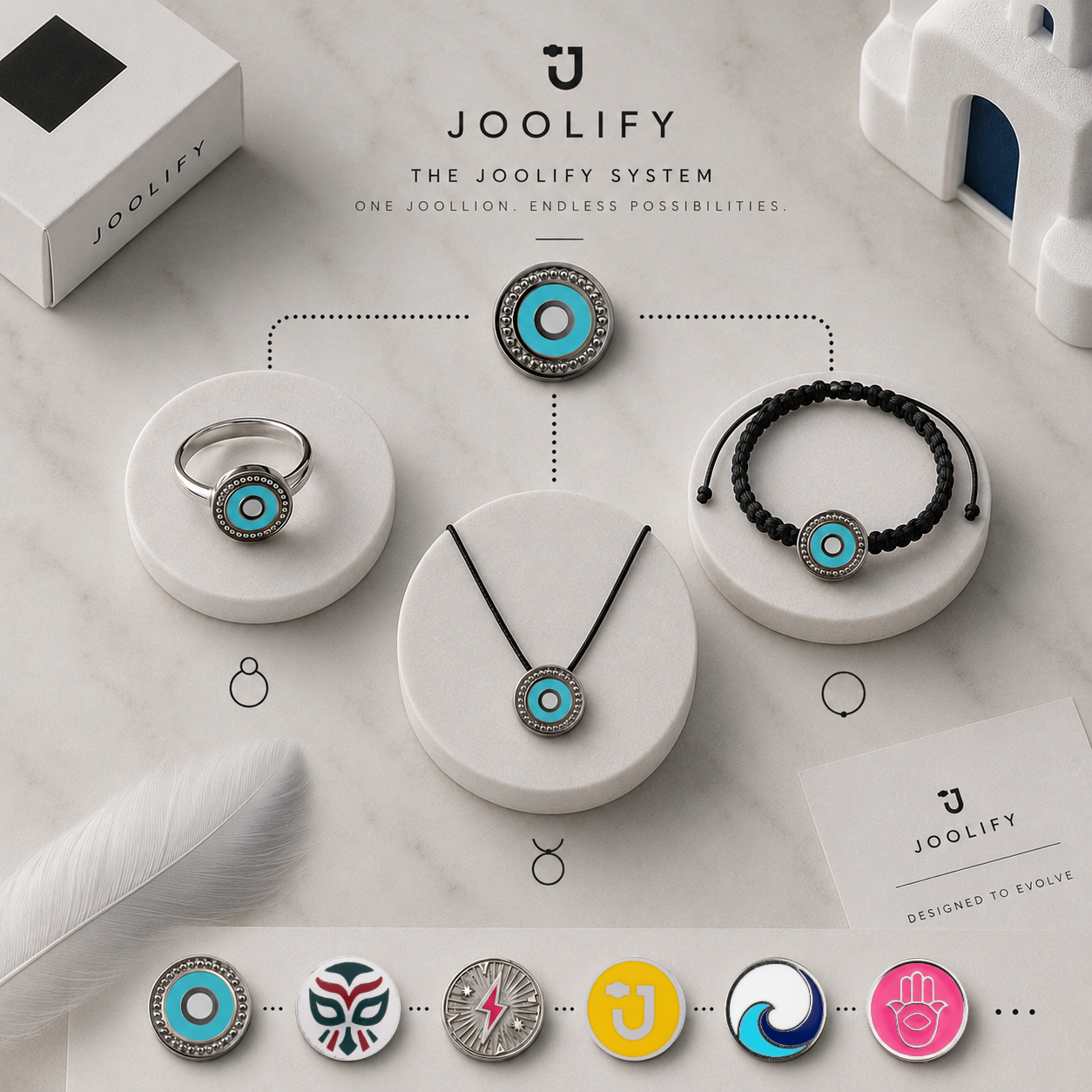
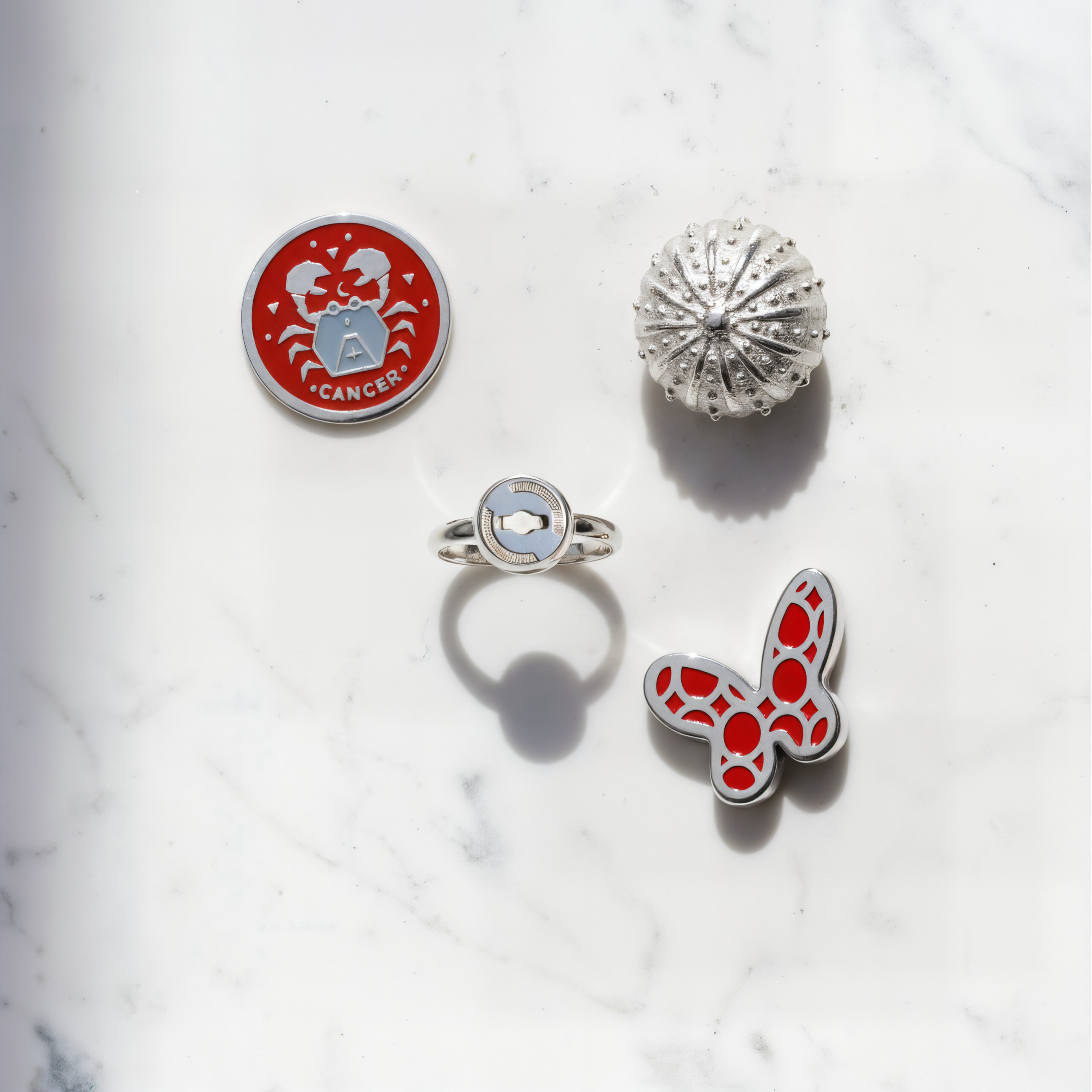
Within the Joolify System, for example, one Joolet can be combined with different Joollions.
If you want a different symbol, colour or aesthetic, you do not need to replace the entire piece. You can change the element you want to express something different. The base remains useful.
The new element adds another possibility. And previous elements can remain part of your collection. This does not mean that every modular product is automatically circular.
But it shows how modular design and compatibility can create more possibilities for continued use.
A piece of jewelry can remain technically intact for many years and still stop being something you wear. Because your style changed. Your everyday life changed. Or what you want to express changed.
That is why product life is not determined only by durability.
It also depends on how easily a product can remain relevant to you.
When design allows jewelry to adapt to new needs, longevity gains another dimension. It is not only about how long something can physically last.
It is also about how long it can continue to have a reason to be used.
Circularity does not have a single solution. It is not enough for a product to be recyclable. What happens long before recycling becomes necessary matters too. How long it can be used. How easily it can adapt. How much of it can be retained.
And how many new possibilities it can gain without requiring the entire product to be replaced each time. Perhaps, then, more circular jewelry is not simply jewelry for which we have designed a better ending.
Perhaps it is jewelry for which we have designed more ways to continue.
Within the Joolify System, the ability to change is not added at the end of a piece’s life.
It is part of its architecture from the beginning.
Discover how Joolets and Joollions work together within a compatible modular system designed to allow the same jewelry to take on new expressions and new possibilities over time.
Jewelry upcycling is the process of reusing a piece of jewelry, its materials or its components in a way that gives them a new form, use or value.
Unlike recycling, where materials may return to the production process as raw material, upcycling aims to preserve as much of the object’s existing value as possible while giving it a new purpose.
With reuse, you continue using the same piece without substantially changing it. With recycling, its materials are recovered so they can be used again. With upcycling, you use the existing piece or its components to create a new use, form or value.
All three approaches can extend the usefulness of resources, but they do so in different ways.
Yes. Jewelry can be designed so that individual elements can be changed, replaced or reused, reducing the need to replace the entire piece when your needs or preferences change.
In this sense, sustainability depends not only on the materials used but also on how effectively a piece can remain useful and desirable over time.
