


YOUR BAG
YOUR BAG
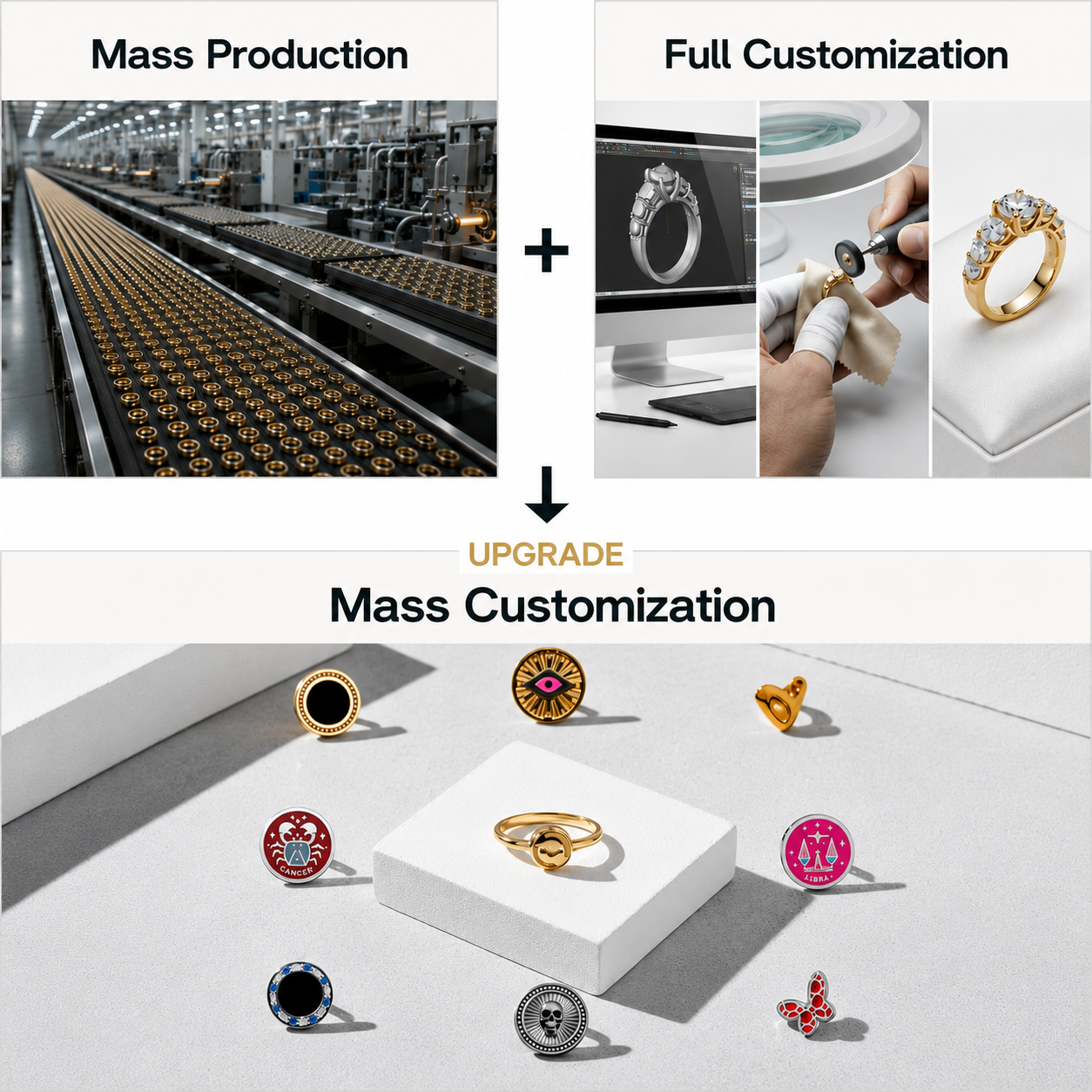
For decades, mass production followed one simple principle: The same product for everyone. This model allowed companies to reduce cost, increase speed, and serve millions of people.
But it came with one major limitation: Limited personal expression.
On the other side, full customization offered uniqueness – but often with higher cost, slower speed, and lower scalability.
Somewhere between these two worlds, Mass Customization emerged.
A strategic model that allows brands to combine the efficiency of mass production with meaningful individual adaptation. In simple terms: Mass Customization means personalization at scale.
And this shift did not only influence design.
It changed how people expect to interact with products.
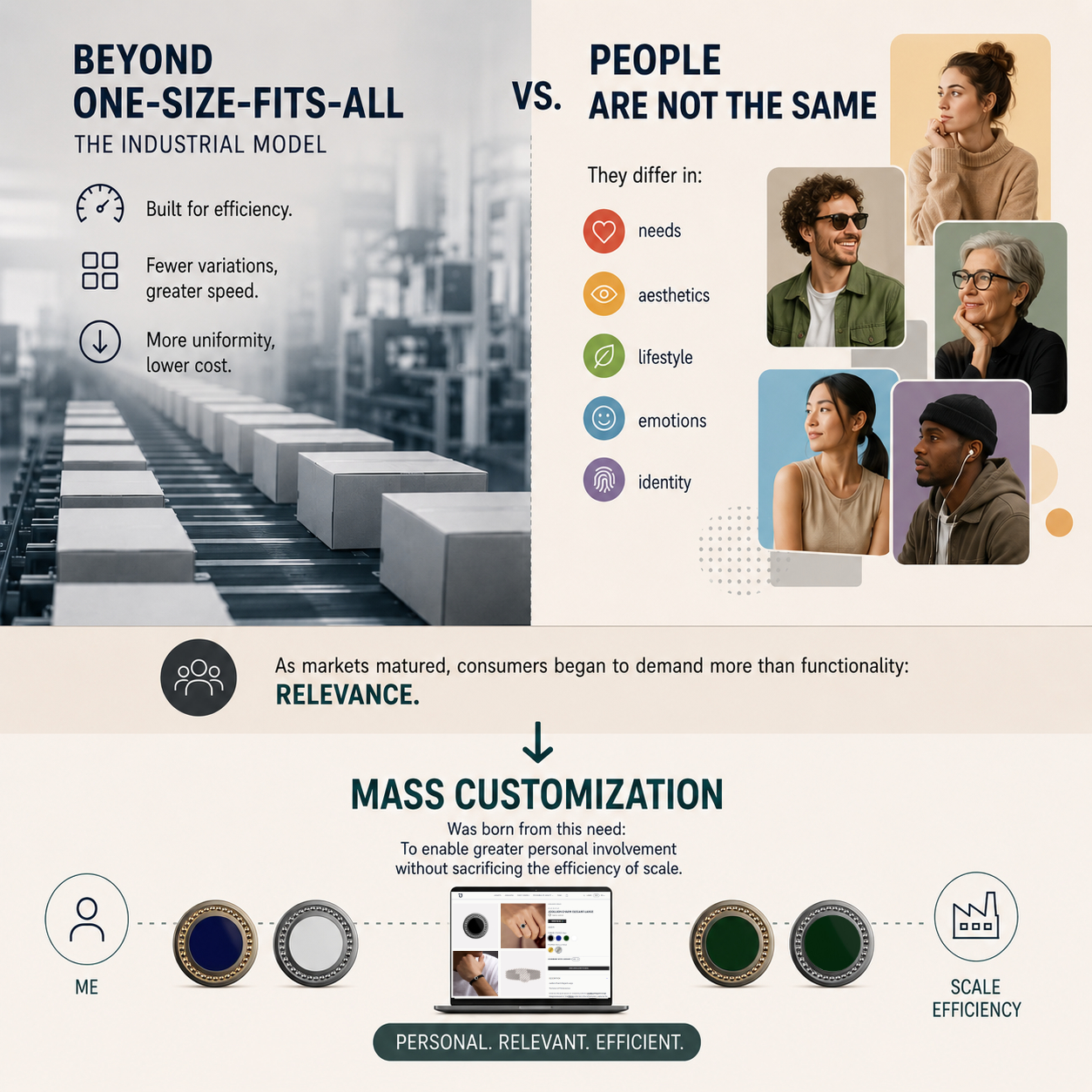
Traditional industrial models were built for efficiency.
Fewer variations meant greater speed.
More uniformity meant lower cost.
But people are not identical.
They differ in:
– needs
– aesthetics
– lifestyle
– emotion
– identity
As markets matured, consumers began demanding more than function:
Relevance.
Mass Customization emerged from this exact shift:
To allow deeper personal participation without sacrificing scalable efficiency.
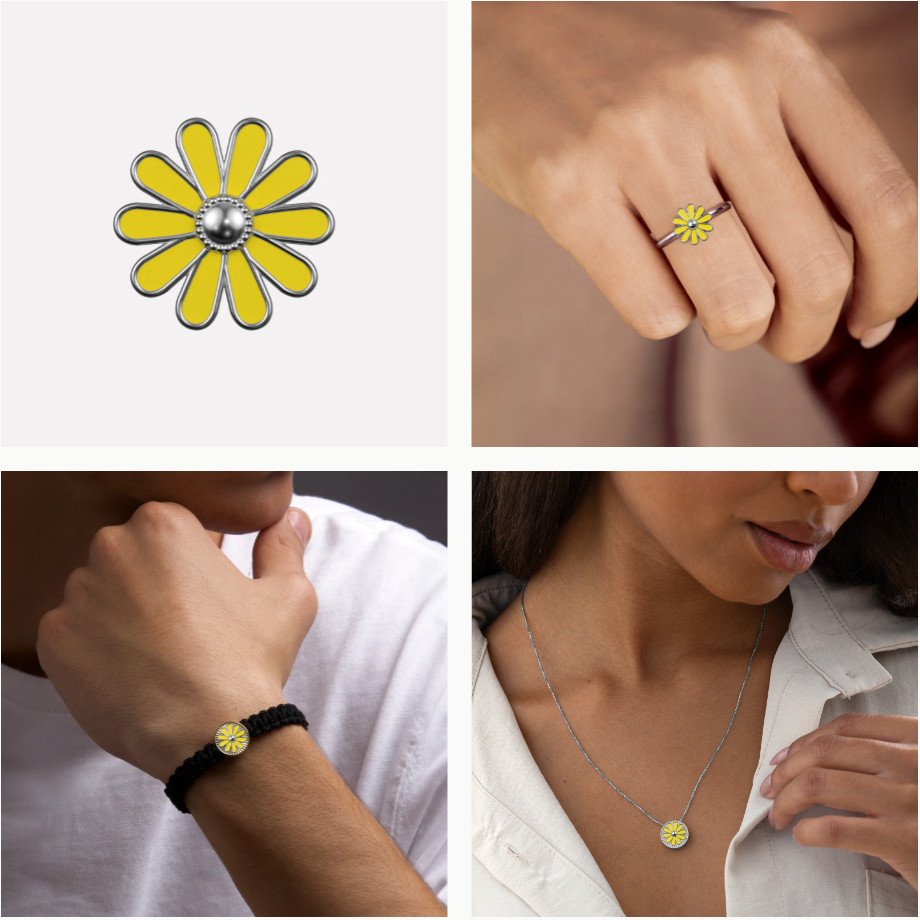
Mass Customization does not mean every product is built from scratch.
This may include:
– feature selection
– modularity
– adaptive use
– visual personalization
– differentiated experiences
The key is that personalization does not destroy production logic.
Instead – It is strategically built into it.
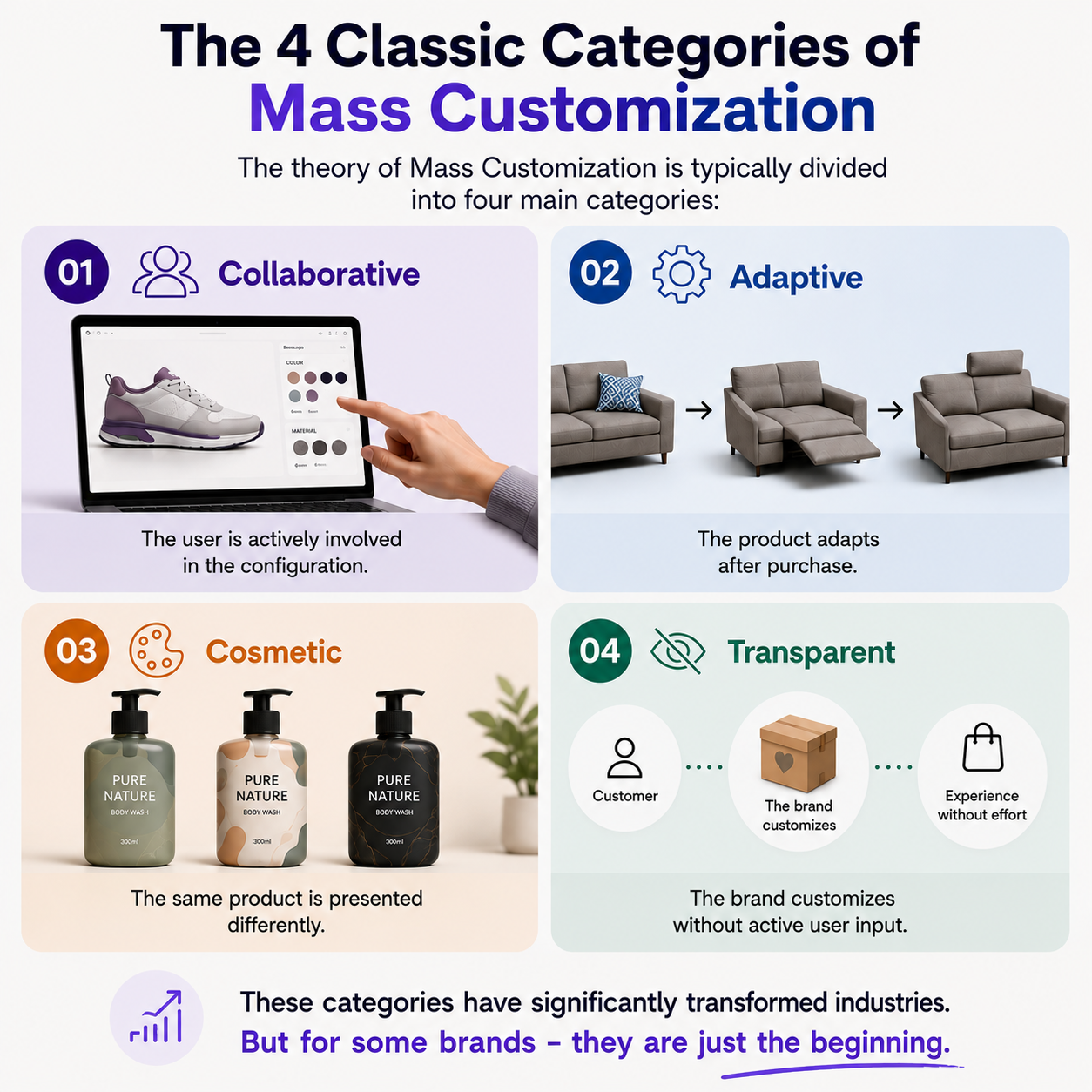
Mass Customization theory is typically divided into four major categories:
Collaborative
The user actively shapes the outcome.
Adaptive
The product adapts after purchase.
Cosmetic
The same product is presented differently.
Transparent
The brand customizes without active user intervention.
These categories transformed industries.
But for many systems – they are only the beginning.
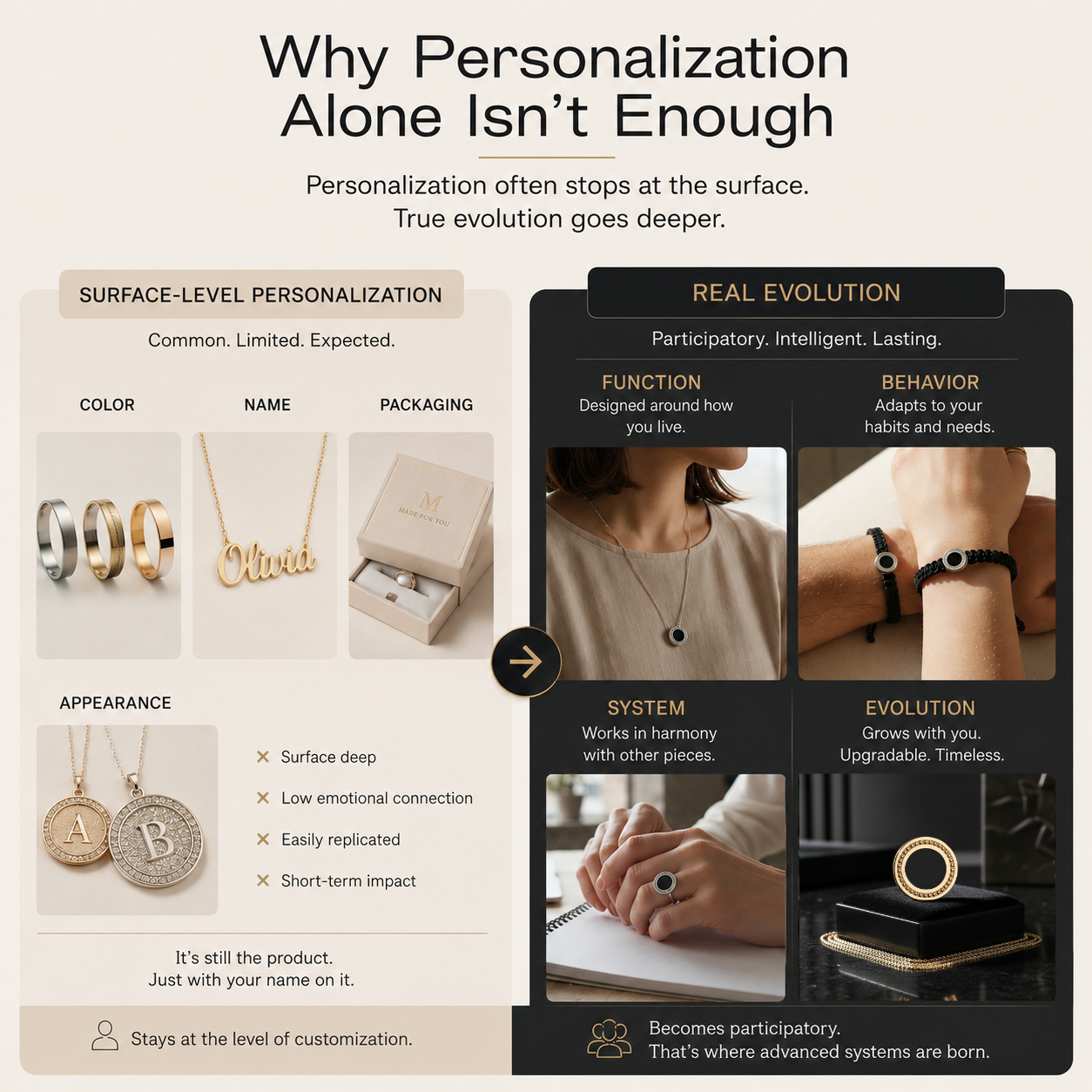
Personalization often remains surface-level.
Colour.
Name.
Packaging.
Appearance.
But deeper evolution begins when customization reaches broader layers:
Function.
Behavior.
System.
Evolution.
That is where a product stops being merely personalized.
It becomes participatory.
And that is what separates advanced systems from basic customization.
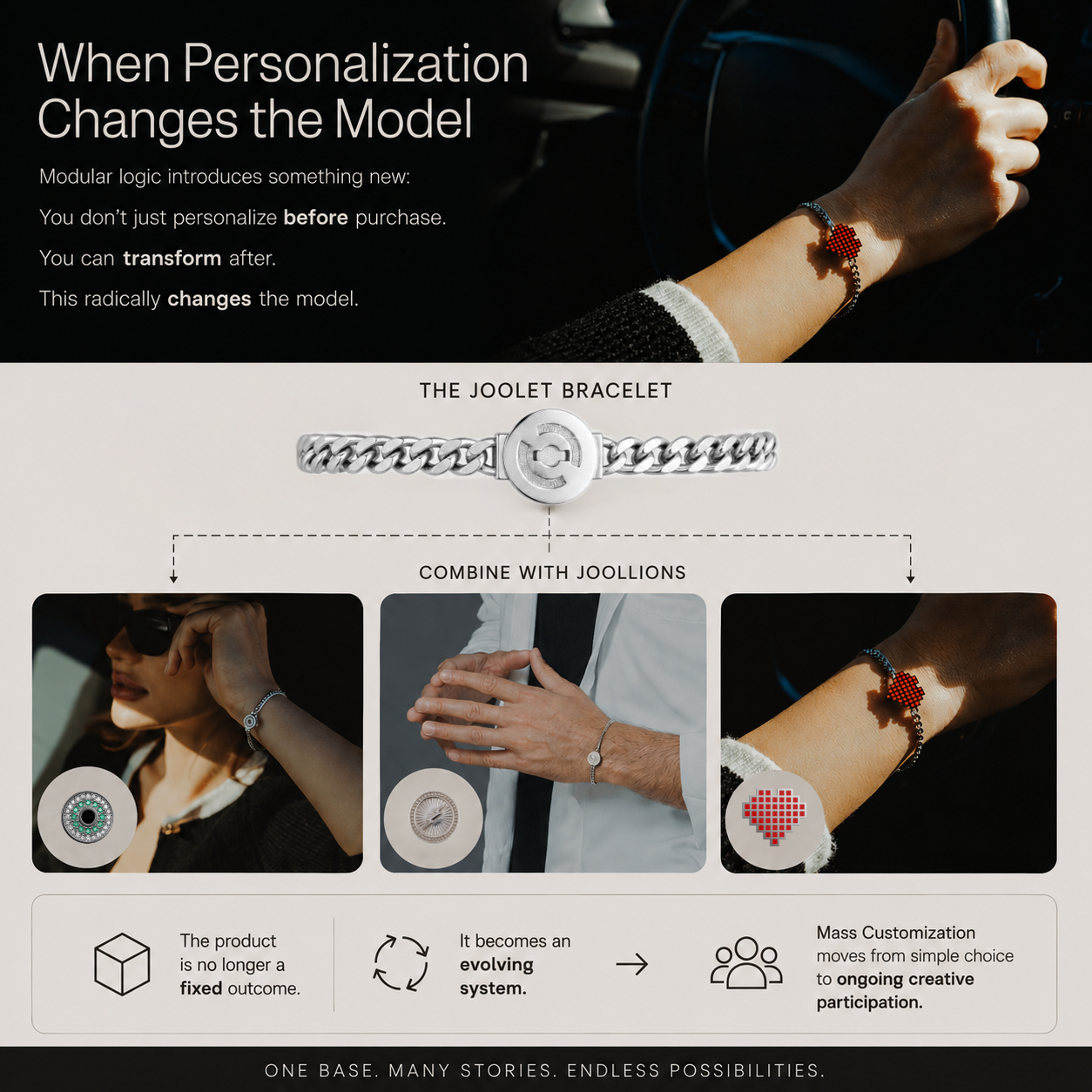
Modularity introduces something fundamentally new:
Customization does not end before purchase.
Transformation can continue after.
This radically changes the model.
Because product stops being a fixed outcome.
It becomes an evolving system.
And when that happens, Mass Customization shifts from simple choice – to ongoing creative participation.
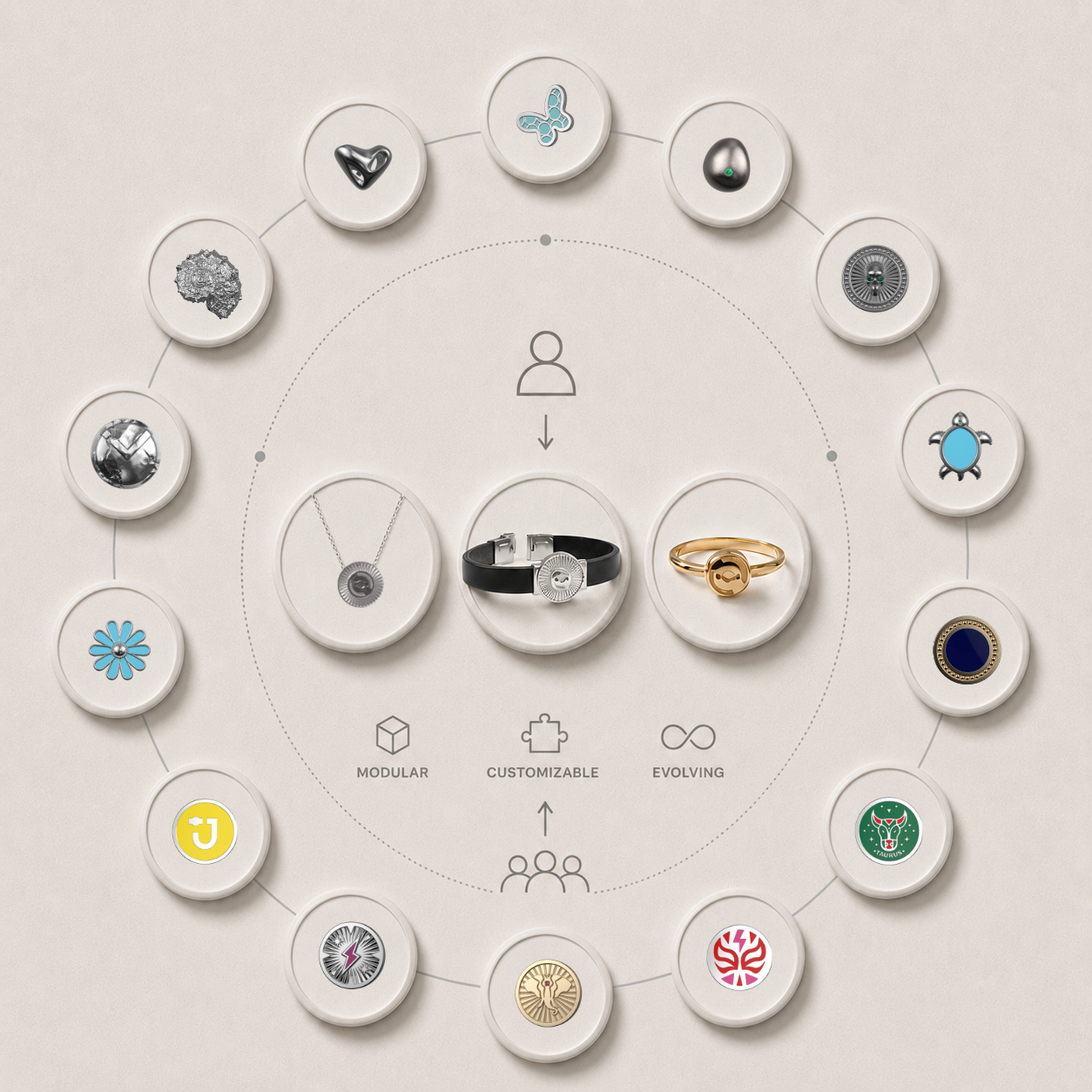
When a system enables continuous transformation through recombination, universal compatibility, and evolving use – a more advanced category emerges:
Extensive Modular Mass Customization.
Here, customization is not a moment.
It is an ongoing capability.
Product becomes platform.
And the user is no longer just a customer.
They become an active co-creator of experience.
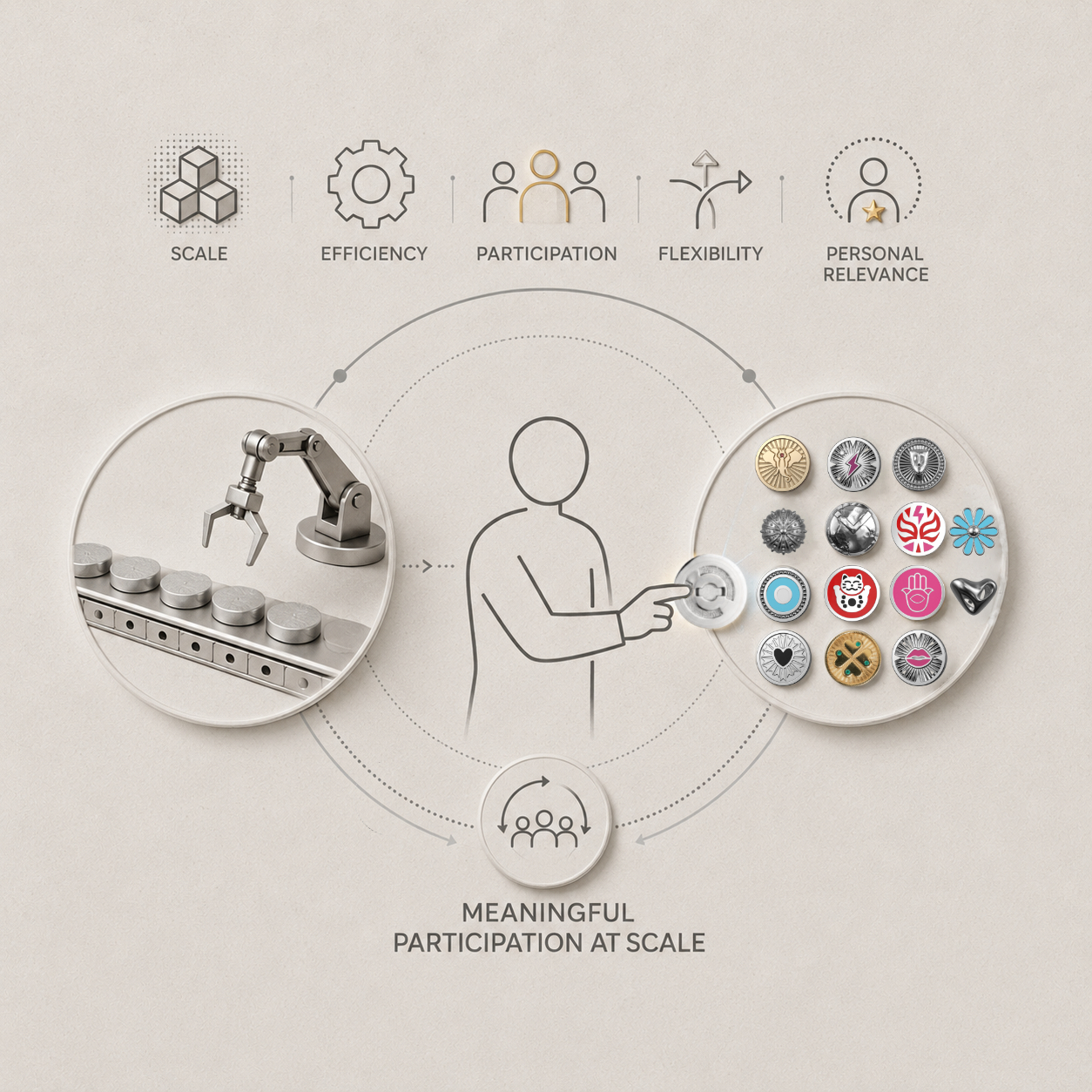
The future belongs to brands that can balance:
Scale.
Efficiency.
Participation.
Flexibility.
Personal relevance.
Mass Customization is not only about production.
It is about redesigning the relationship between people and products.
And as people increasingly seek stronger relevance in what they choose – the brands that stand out will not simply produce.
They will enable meaningful participation at scale.
At Joolify, we design jewelry that does not remain static, but evolves alongside the person wearing it.
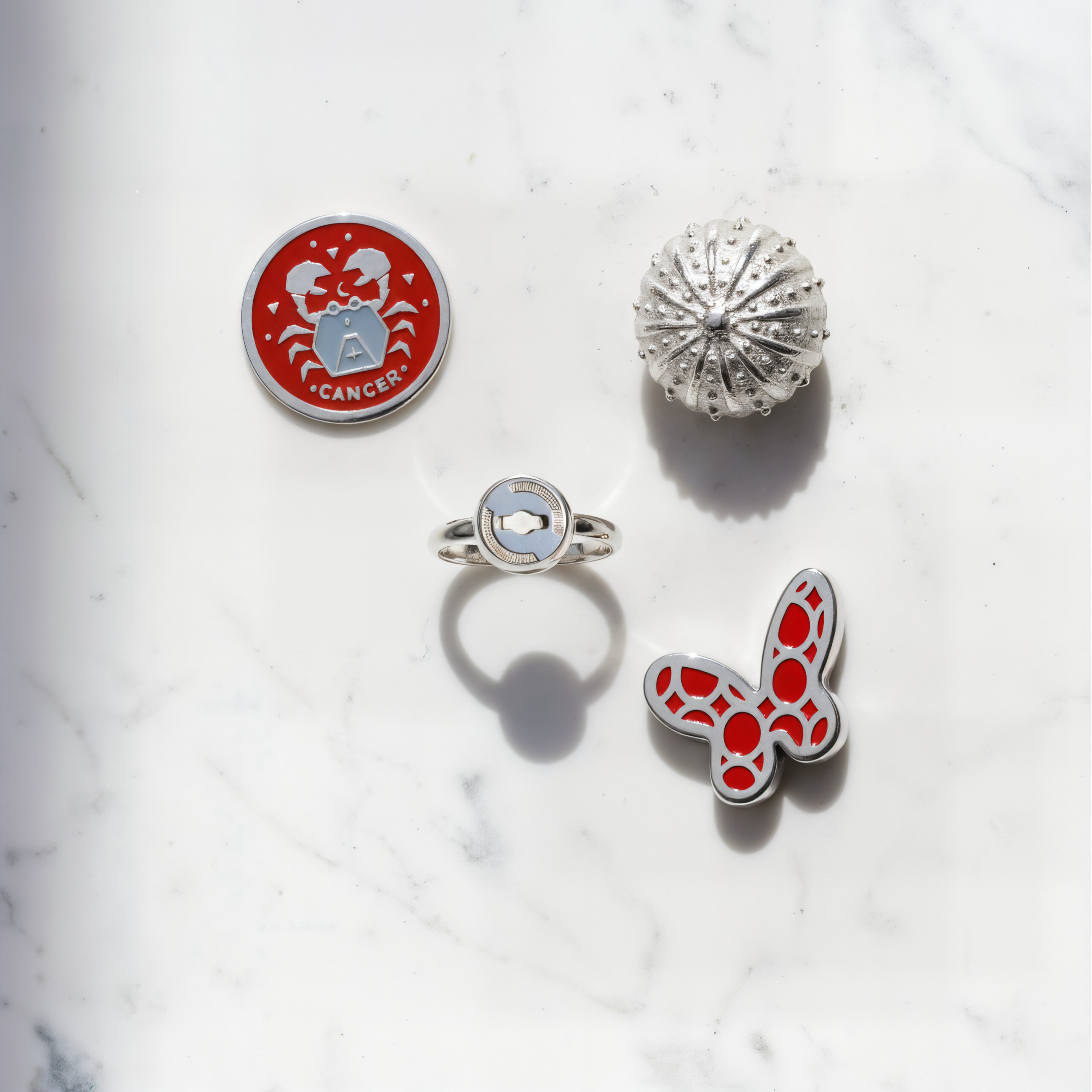
Mass Customization is a strategic model that combines the efficiency of mass production with meaningful personalization, enabling personalization at scale.
Personalization often focuses on surface-level options, while mass customization builds scalable systems that enable deeper meaningful differentiation.
Because it enables continuous transformation and creative participation even after purchase, turning product from static object into evolving system.
